Explore New Worlds
.jpg)
M³: Interactive Manifold Explorer
![image of personalized itineraries [digital project]](https://cdn.prod.website-files.com/693afe3332324d649bbd8db5/693b145f01d21adb727480d8_unnamed%20(6).jpg)
Papers: Dive into New Worlds and Theory

Unravel non-orientable spaces, test the Mayo Manifold Machine, and play with topology tools. Learn, experiment, and collaborate—no advanced math required.
Unravel non-orientable spaces, test the Mayo Manifold Machine, and play with topology tools. Learn, experiment, and collaborate—no advanced math required.
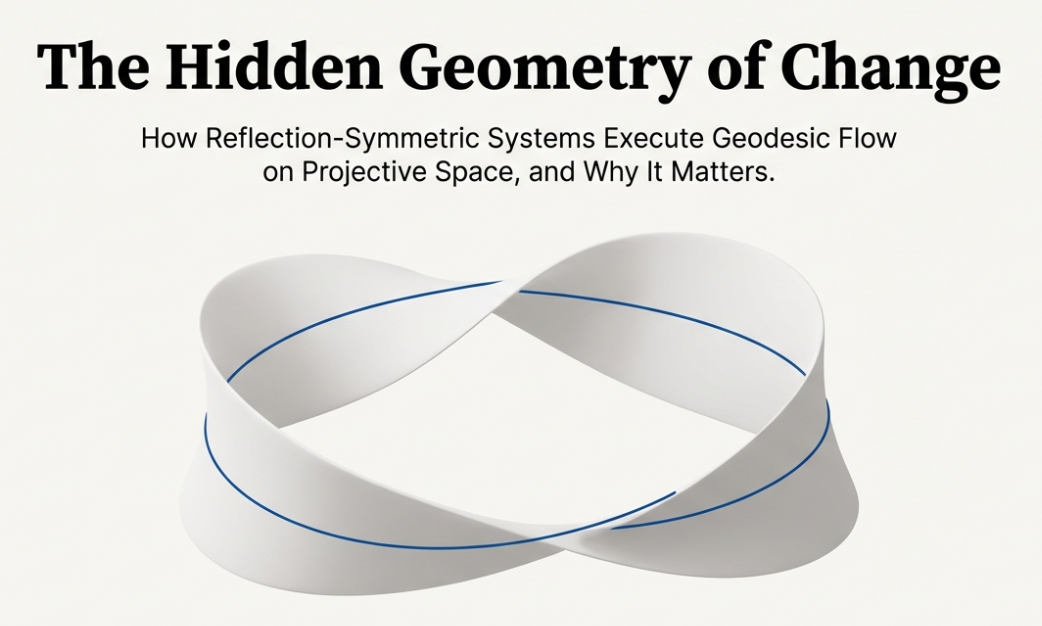
Discover how FlipZip achieves up to 68% data compression using non-orientable topology. See real results and interactive demos.

Solve Möbius, Rubik’s, and wormhole games that make advanced math intuitive. Save progress and challenge your perspective.
.jpg)
Shrink files with our breakthrough algorithm. See how topology unlocks smarter storage.
.jpg)
Explore why this constant appears in seams, physics, and compression. Uncover the math.
.jpg)
Experiment with Möbius strips, wormholes, and puzzles. Make advanced math hands-on.
.jpg)
Visualize non-orientable spaces and build your own manifold models in real time.
.jpg)
Browse new papers, blog posts, and discoveries in geometric information theory and compression.
Learn how seam boundaries shape topology and power next-gen data compression.
See how color pairs like red↔orange reveal hidden structure in data and design.
Discover why orientation is perspective, not property—challenge your intuition.
Join our open research community, share ideas, or start a project together.
Get updates on new tools, games, and research breakthroughs. No spam—just discovery.
Explore non-orientable spaces, compression breakthroughs, and interactive math—made accessible for all curious minds.
Get started.jpg)
Non-orientable topology studies shapes like Möbius strips and Klein bottles—surfaces with only one side. These structures challenge our intuition and reveal new ways to understand space, symmetry, and orientation.
FlipZip leverages topological insights to compress data. It identifies 'seams'—hidden patterns in data—using the universal constant k*≈0.721, achieving efficient storage without loss.
The Mayo Manifold Machine (M³) is a framework for visualizing and manipulating complex geometric spaces. It powers interactive games and tools that make advanced math concepts hands-on and intuitive.
The constant k*≈0.721 appears across topology, compression, and physics. It marks the optimal point for seam placement, unlocking new efficiencies and revealing deep connections between math and the real world.